
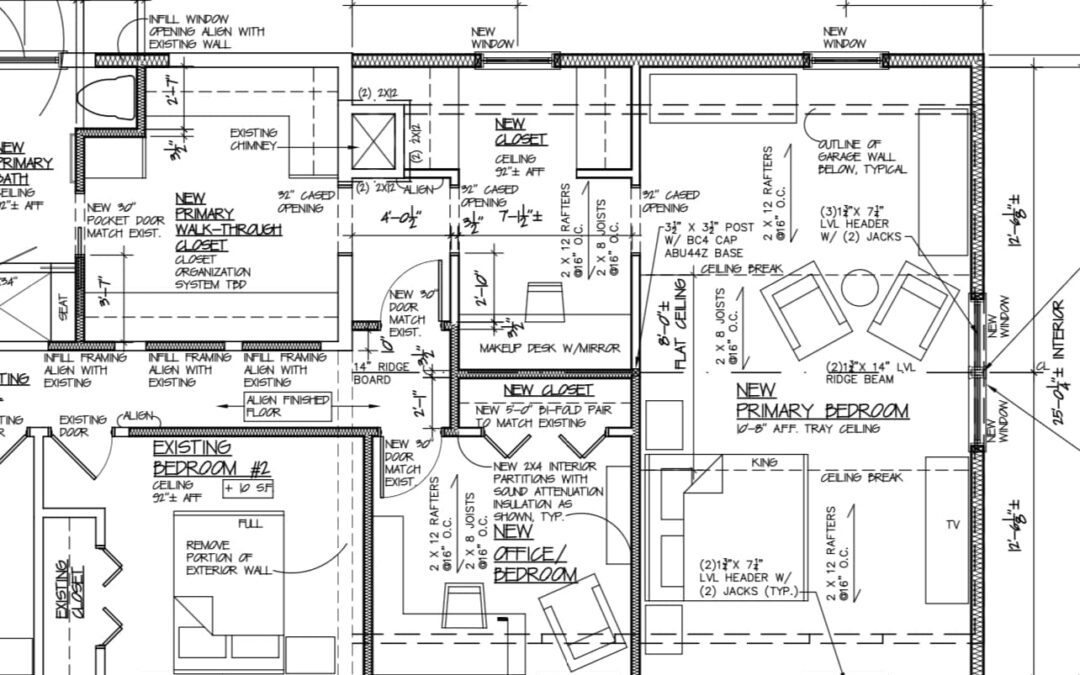
Skipping a building permit on a home addition in Connecticut might seem like a shortcut that saves time and money. It is not. Here is exactly what goes wrong, and why licensed general contractors pull permits on every project they touch.
Every year homeowners across Tolland, Coventry, and the rest of eastern Connecticut are tempted by the same pitch from a low-bid contractor: “We can skip the permit, get this done faster, and save you a few hundred bucks.” That pitch sounds reasonable until you try to sell your house, file an insurance claim, or realize the addition your family just moved into was built on undersized footings that cannot handle a Connecticut winter frost load.
The permit process exists for a reason that goes well beyond bureaucracy. In Connecticut, the State Building Code, adopted under the Connecticut General Statutes Section 29-252, sets minimum standards for structural integrity, fire separation, egress, and mechanical systems. When an addition gets built without a permit, nobody checks any of it. And the consequences are not theoretical — they are documented, costly, and in some cases irreversible.
Connecticut contractors are required by law to obtain permits for any structural work, new construction, additions, or significant alterations. A licensed general contractor who suggests skipping the permit is taking a legal risk with your property — not theirs.
The Real Cost of Unpermitted Home Addition Work in Connecticut
Most homeowners who end up with unpermitted additions did not build them on purpose. They hired someone who said they would handle the permits and never did, or they bought a house where a previous owner added space without going through the proper channels. Either way, the financial exposure lands on the current property owner.
Here is what unpermitted work actually costs:
Failed Home Sale
Real estate attorneys and buyers’ inspectors in Connecticut flag unpermitted additions during title searches and home inspections. Buyers back out, or they demand a price reduction far larger than what the permit would have cost. A 400-square-foot addition that skipped a $600 permit can kill a deal worth hundreds of thousands of dollars.
Denied Insurance Claims
If a fire starts in an unpermitted addition, your homeowner’s insurance carrier has legal grounds to deny the claim. They write policies based on the permitted structure. Anything built outside that permitted record is, from their perspective, an unauthorized modification that voids coverage in the affected area.
Stop-Work Orders and Demolition
Building officials in Connecticut have the authority to require that unpermitted construction be exposed for inspection — or demolished entirely. If your town discovers the work, you may be required to open walls, remove framing, and rebuild. You pay for the original construction and the remediation.
Retroactive Permit Penalties
Most Connecticut municipalities charge a penalty multiplier — often two to three times the standard permit fee — when a permit is pulled after work is already complete. Towns like Andover and Bolton have the same authority as any other municipality to assess these fees and require third-party inspection before the work can be approved.
Contractor Liability Gaps
When a contractor builds without a permit, they often have no documented proof of their work. If something fails structurally five years later, the homeowner has very limited legal recourse. There is no inspection record, no approved plan, and frequently no paper trail tying the contractor to the project.
Property Tax Complications
Permitted additions increase assessed value through a legal, documented process. Unpermitted additions discovered during a reassessment can trigger back taxes, interest, and penalties. Some municipalities in eastern Connecticut have conducted aerial surveys specifically to identify unreported additions and structures.
Why Connecticut Building Inspections Protect Homeowners — Not Just Towns
A lot of homeowners see the inspection process as an adversarial one. The building official shows up, finds something wrong, and creates more work. The reality is the opposite. Inspections at framing, rough mechanical, and final stages catch errors that your contractor might not even know they made.
Eastern Connecticut soil conditions matter here. Frost depth in this region runs to 48 inches in many areas, and footings for additions have to be designed accordingly. A foundation installed by a contractor unfamiliar with local frost depths will heave, crack, and settle within a few seasons. An inspector reviewing the footing depth before the concrete is poured stops that problem before it is buried. Without a permit, no one looks at the footings. Ever.
The same applies to framing. When you add a second floor or a large single-story addition, the existing structure has to carry that new load path down to the foundation. A missed header, an undersized beam, or improperly transferred point loads create conditions that can cause serious structural failure over time. These are exactly the kinds of defects that framing inspections catch.
For more on how structural issues develop in Connecticut homes and what remediation actually looks like, see our guide on signs that structural renovation is needed.
What the Permit Process Actually Looks Like for a Home Addition
One reason homeowners accept the unpermitted shortcut is that they assume permits are complicated and slow. In practice, for a straightforward addition in eastern Connecticut, the process is predictable and manageable when handled by a contractor who knows the local building departments.
Plan Submission and Review
For most additions, the general contractor submits drawings, a site plan, and a description of work to the local building official. Connecticut towns typically have a 30-day review window, though many process residential addition permits faster. Towns like Coventry and Tolland have building departments that experienced contractors have standing relationships with, which smooths the process considerably.
Inspections During Construction
Inspections happen at specific stages: footing, foundation, rough framing, rough electrical, rough plumbing if applicable, insulation, and final. Each one is scheduled by the contractor and typically takes under an hour. A well-organized GC builds inspection windows into the project schedule so they never become a bottleneck.
Certificate of Occupancy
When all inspections pass, the building department issues a Certificate of Occupancy. That document is what makes your addition legal, insurable, and sellable. It is also the final proof that the work was done to code.
For a detailed look at how a permitted addition project flows from start to finish, read through our breakdown of the home addition process in eastern Connecticut.
According to the Connecticut Department of Administrative Services Building Department, all new residential additions require a permit prior to the start of construction. There are no exceptions based on project size for structural work.
Red Flags When Hiring a Contractor Who Mentions Skipping Permits
A contractor who suggests going without a permit is not saving you money. They are shifting risk onto you. Here is what that suggestion usually means about the contractor themselves:
- They are not properly licensed in Connecticut, and a permit application would expose that
- They do not carry adequate liability insurance or workers’ compensation
- They have had inspections fail in the past and want to avoid that scrutiny
- They are pricing work below what proper licensed construction costs because they are cutting structural corners
- They plan to be unreachable if anything goes wrong six months after completion
In Connecticut, only a licensed contractor with a valid Home Improvement Contractor registration can legally perform this type of work. Permit applications require that license number. A contractor who wants to skip the permit almost certainly cannot submit a legal application in the first place.
If you are evaluating contractors for an addition project, our guide on choosing a general contractor in eastern Connecticut walks through exactly what credentials, questions, and contract terms to require before signing anything.
If You Already Have Unpermitted Work on Your Property
This situation is more common than most buyers and homeowners realize. If you purchased a home in Andover, Bolton, or anywhere else in eastern Connecticut and later discovered that an addition or finished space was built without permits, you have options — but you need to act deliberately.
The first step is to request all available records from the local building department. Sometimes work was permitted and the permits simply were not transferred with the property. If there truly are no permits on record, you have two paths: a retroactive permit application or a voluntary disclosure and remediation before listing the property.
Retroactive permits typically require an inspection of accessible work. If walls are already closed, the building official may require selective demolition to verify structural elements. A licensed general contractor who knows Connecticut code can often scope the minimum necessary exposure to satisfy the inspector while limiting disruption.
The worst approach is to sell the property without disclosing known unpermitted work. Connecticut law requires sellers to disclose known material defects. Unpermitted construction that affects livable space is a material defect. The legal exposure from non-disclosure far exceeds the cost of remediation.
What Properly Permitted Additions Actually Cost in Eastern Connecticut
The permit fee itself is rarely the issue. For a typical home addition in eastern Connecticut, permit fees range from roughly $500 to $1,500 depending on the size of the project and the municipality. That number is a fraction of total project cost, and it is built into every legitimate contractor’s bid. If a competing bid is dramatically lower, the first thing to verify is whether permits are included. They almost always are not when the price looks too good to be true.
For a full breakdown of what additions actually cost in Connecticut including all hard and soft costs, see our detailed post on home addition costs in Connecticut for 2026.
The permit cost is not a line item worth cutting. It is the document that makes everything you spent on the addition actually worth something.
Plan Your Addition the Right Way From Day One
If you are planning a home addition in eastern Connecticut and want a contractor who pulls every permit, schedules every inspection, and hands you a Certificate of Occupancy when the job is done — that is exactly how Lagace Construction operates. Do not let a low-bid contractor turn your addition into a liability that follows you for years. Reach out now and let’s talk through your project before a single shovel hits the ground.
