
Connecticut ADU Guide 2026: Accessory Dwelling Units & In-Law Suites Explained
If you live in Connecticut and have been thinking about adding an in-law suite, a rental apartment, or a private space for a loved one, Accessory Dwelling Units (ADUs) may be the most powerful home improvement investment available to you in 2026. Thanks to statewide legislation and a growing demand for flexible housing, ADUs have become one of the most searched topics among Connecticut homeowners – and for good reason.
At Lagace Construction, we have spent over 24 years building and renovating homes throughout Hartford and Tolland County. We have helped families in Andover, Coventry, Tolland, Hebron, Columbia, Marlborough, Southington, and Mansfield navigate the full process – from the first planning conversation to the final building inspection. This guide is designed to give you a real, ground-level understanding of what ADUs are, what Connecticut law says, and what it actually costs and takes to build one the right way.
What Is an Accessory Dwelling Unit (ADU)?
An Accessory Dwelling Unit is a self-contained living space on the same property as a primary single-family home. It includes its own kitchen or kitchenette, bathroom, sleeping area, and typically a separate entrance. ADUs are also known as in-law suites, granny flats, carriage house apartments, backyard cottages, or secondary dwelling units.
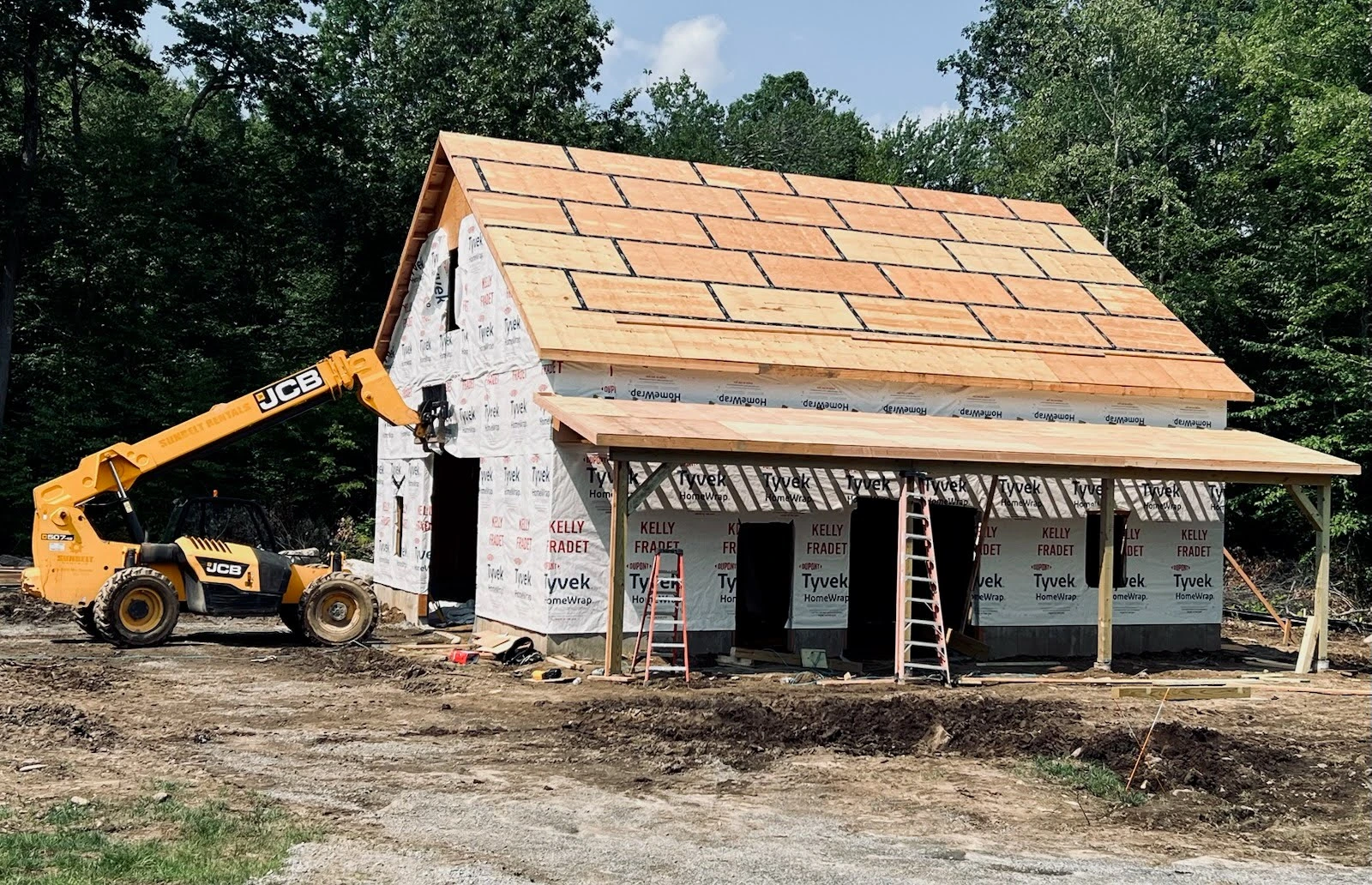
There are three main types of ADUs commonly built in Connecticut:
- Attached ADUs – additions or conversions built onto the side or rear of the main house, sharing at least one wall.
- Interior ADUs – converted basements, attics, or garages that are fully finished as self-contained units within the existing home footprint.
- Detached ADUs – standalone structures in the backyard or over a detached garage, completely separate from the primary residence.
Connecticut Public Act 21-29: What It Changed and What It Didn’t
In 2021, Connecticut passed Public Act 21-29, a landmark piece of housing legislation that legalized ADUs as-of-right in all residential zones statewide. Before this law, most Connecticut towns either prohibited ADUs entirely or required a discretionary special permit – a process that could take months and had no guaranteed outcome.
Public Act 21-29 changed the default. It requires Connecticut municipalities to allow at least one ADU per single-family lot without requiring a special permit, provided the unit meets state-defined criteria including minimum lot size, setback compliance, and parking requirements. However, the law also allows towns to adopt their own ADU regulations that can be stricter in some ways. Many Connecticut towns in Hartford and Tolland Counties have adopted local ordinances. You must verify the specific rules for your town before you begin planning.
Key State-Level Requirements Under CT ADU Law
- Lot size minimum: Most towns require a minimum lot size to qualify for an as-of-right ADU.
- Maximum size: ADUs are often capped at the lesser of 1,000 square feet or 30% of the primary dwelling’s gross floor area.
- Owner-occupancy: Many towns require the property owner to occupy either the primary home or the ADU as their primary residence.
- Parking: Typically one additional off-street parking space is required per ADU.
- Design standards: The ADU must generally match the exterior appearance of the primary structure in materials, color, and roof pitch.
Town-Specific ADU Rules in Hartford and Tolland Counties
One of the most common mistakes homeowners make is assuming the process is uniform across Connecticut towns. Here is a snapshot of how key towns in our service area handle ADU applications:
Coventry and Tolland, CT
Both towns permit ADUs consistent with state law, but require a zoning permit application that includes a site plan, floor plan, and proof of lot size compliance. Coventry enforces an owner-occupancy requirement for detached ADUs. Tolland encourages attached ADUs over detached structures in most residential zones.
Hebron, CT
Hebron allows accessory apartments as of right in single-family zones, subject to lot size minimums and setback compliance. Interior conversions – such as basement apartments – are often the most streamlined to permit in Hebron, as they do not affect the exterior footprint of the structure.
Southington, CT
Southington has more active zoning enforcement and requires applicants to navigate a more formal permitting process. Detached ADUs and additions may require a special permit or variance depending on lot coverage and setback compliance. Homeowners in Southington benefit significantly from working with a contractor experienced in local permitting – Lagace Construction has successfully navigated this process for clients in the area.
Andover and Columbia, CT
Both are smaller, rural municipalities where septic system capacity is often the primary limiting factor for ADU development. Before any ADU project begins in these towns, a septic capacity evaluation is essential. Connecticut Public Health Code requires that the septic system be designed to handle the additional occupant load of the new unit.
The Financial Case for an ADU in Connecticut
ADUs are one of the few home improvement projects that can pay for themselves – and then some. The financial case is compelling from multiple angles.
Rental Income Potential
In Hartford and Tolland County, a well-finished ADU typically commands between $1,200 and $1,800 per month in rental income, depending on size, finishes, and location. A 600-square-foot basement apartment in a town like Tolland or Coventry can generate over $15,000 per year in passive income – often enough to cover a significant portion of mortgage payments or fund the original construction cost within 10 to 12 years.
Multi-Generational Living and Elder Care
The demand for multi-generational housing has never been higher. A 2021 AARP survey found that 86% of adults would consider building an ADU to provide housing for a loved one in need of care. In Connecticut, where assisted living costs routinely exceed $6,000 per month, an on-property ADU offers a dignified, cost-effective alternative that keeps families close while maintaining genuine independence for every member.
Property Value Impact
A legal, permitted ADU adds measurable market value to a Connecticut home. Real estate appraisers typically capitalize the rental income stream of a legal ADU, which can add $75,000 to $150,000 or more to a property’s appraised value depending on quality of construction and local rental rates. This value increase often far outpaces the cost of construction.
ADU Construction Costs in Connecticut: 2026 Guide
| ADU Type | Typical Size | 2026 Estimated Cost Range | Key Variables |
|---|---|---|---|
| Interior Basement Conversion | 400–900 sq ft | $45,000 – $95,000 | Egress windows, plumbing, waterproofing |
| Garage Conversion (Attached) | 400–700 sq ft | $50,000 – $90,000 | Insulation, HVAC extension, flooring system |
| Attached Addition | 500–1,000 sq ft | $120,000 – $220,000 | Foundation, framing, full mechanical systems |
| Detached Backyard Cottage | 400–800 sq ft | $140,000 – $280,000 | Utility connections, new foundation, permits |
These ranges reflect current Connecticut labor and material costs and include permit fees, structural work, electrical, plumbing, HVAC, and finish materials. Projects in rural towns with septic constraints often carry additional costs for septic upgrades, which can range from $8,000 to $30,000 or more depending on system capacity.
The ADU Building Process: From Zoning Permit to Certificate of Occupancy
Step 1: Site Assessment and Zoning Review (Weeks 1–3)
We start with a site visit to assess the existing structure, lot, and utility infrastructure. We review your town’s zoning regulations and advise on the most feasible ADU configuration for your property. If septic is a factor, we coordinate with a licensed sanitarian at this stage.
Step 2: Design and Permit Application (Weeks 3–8)
We prepare site plans, floor plans, and any drawings required by your local building department. We submit the zoning and building permit applications on your behalf. Permit review timelines typically run 3 to 6 weeks in most Hartford and Tolland County municipalities.
Step 3: Construction (8–24 Weeks, Depending on Scope)
Our licensed crew handles all phases – framing, electrical, plumbing, HVAC, insulation, waterproofing, and finish work. Because our team is on-site every day, quality control is continuous throughout the entire project, not just at the end.
Step 4: Inspections and Certificate of Occupancy
Connecticut building code requires multiple inspections throughout construction – framing, electrical rough-in, plumbing, insulation, and final. We coordinate all inspections with the local building department and address any punch-list items before your final walkthrough and certificate of occupancy issuance.
Why ADU Work Requires New Home Construction Experience
An ADU is not a simple renovation – it is a legal dwelling unit that must meet the same habitability standards as a new home. This means proper egress, fire separation, weatherproofing, mechanical systems, and structural integrity. Lagace Construction holds a New Home Contractor License (#NHC.0016939) – one of the highest licensing tiers in Connecticut. When you work with us on an ADU, you are working with a team that builds complete homes from the ground up, with the skills, insurance, and code knowledge that complex dwelling unit construction demands.
Ready to Explore an ADU for Your Connecticut Property?
Whether you are considering a finished basement apartment, an attached in-law suite, or a detached backyard cottage, Lagace Construction can guide you from the first conversation to the final certificate of occupancy. We serve homeowners throughout Hartford and Tolland Counties, including Andover, Coventry, Tolland, Hebron, Columbia, Marlborough, Southington, and Mansfield.
Call us at (860) 933-2700 or request a free consultation online below. We will assess your property, walk you through the zoning requirements for your specific town, and provide a realistic picture of costs and timelines – with no sales pressure and no surprises.
Related Reading: Basement Finishing in Tolland County CT | Home Additions in Connecticut